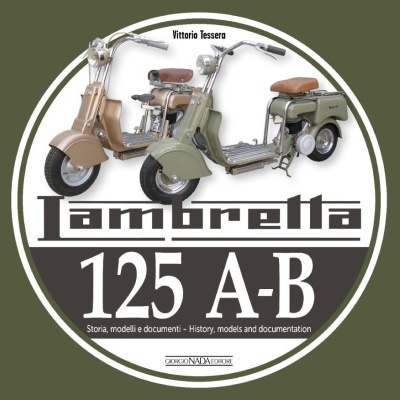
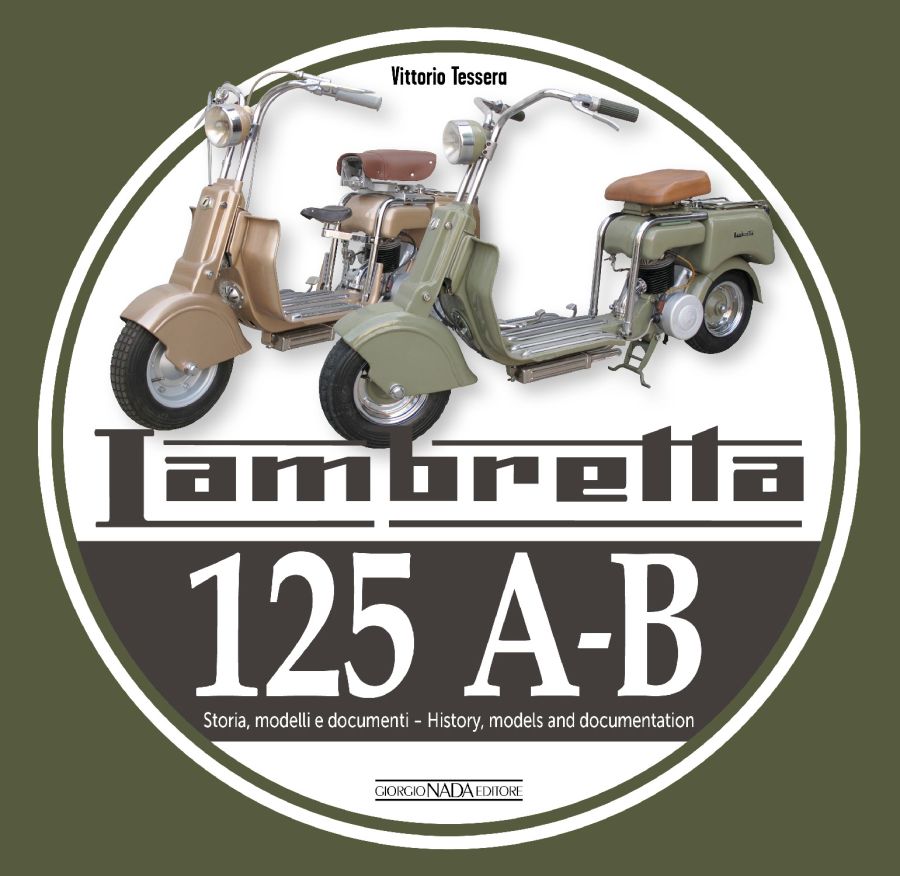
Lambretta 125 A-B Storia, modelli e documenti/History, models & documents
October 1947: the Lambretta is born! A revolution in private transport for millions of scooter-riders worldwide.
The purely Italian and Milanese product would conquer the international motorcycling market as the sportiest, classiest, finest and most modern scooter of all.The first model was designed in Rome as early as 1944, in the home of Ferdinando Innocenti. It was not yet called Lambretta, but simply ‘Esperimento tipo 0’ (‘type 0 experiment’).
After as many as three years of research, development and road testing, the Lambretta was ready to take the international stage. It officially entered the European scootering world at the Paris Motor Show in October 1947.
The first Lambretta was called 125 m (for ‘motorscooter’) and was manufactured from the month of unveiling to October 1948. 9669 units were made.
The request for a more comfortable product led Innocenti to introduce the 125 B in November 1949.
With a more efficient suspension system, larger wheels, and the handlebar gear shifter, the 125 B achieved great commercial success, and the production output was tripled in comparison with the 125 m, which was called 125 A from then on.
The book surveys every version of these early Lambrettas, with chapters on technical details and others more related to advertising and social aspects.
Once again, this monograph bears the signature of Vittorio Tessera, Italy’s leading expert on the Innocenti marque and the Lambretta in particular.
(PUB 09/2024, Autor: Vittorio Tessera, Idioma: Italiano/Inglês, 120 págs, 26X25 cms, capa mole, 114 fotos a cores e 125 fotos p/b)
| Marca | Giorgio Nada editore |
|---|